
The Best Native Shrubs for Year-Round Interest and Seasonal Color
Native shrubs offer some of the most reliable, low maintenance, and ecologically beneficial options ...
Mark your calendars! National Invasive Species Awareness Week (NISAW) runs from February 26 to March 3, 2024. This nationwide initiative is dedicated to raising awareness and identifying solutions to the growing threat of invasive species—at local, state, tribal, regional, national, and even global levels.
Whether you’re a home gardener, nature lover, or conservationist, now is the perfect time to take action in your local environment and help protect the native species of plants and wildlife that define our regional ecosystems.
Invasive species are organisms—plants, animals, or microbes—that are not native to a specific ecosystem and cause harm to the environment, the economy, or human health. While the term “invasive” might suggest a foreign origin, these species don’t necessarily come from outside the country—they can originate from different regions within the same country.
Example:
Lake trout are native to the Great Lakes region, but in Yellowstone Lake, Wyoming, they are invasive because they compete with native cutthroat trout for resources like food, oxygen, and habitat. This kind of displacement disrupts the natural balance and endangers indigenous species.
Usually, invasive species are spread by human activities, and most of the time their spread is unintentional. Every day, humans are improving travel and trade; that is how most species are spread. For instance, ships can carry aquatic organisms in their ballast water. Smaller boats may carry them on their propellers. Insects and bugs can burrow into wood, shipping palettes, and crates that are shipped around the world. Invasive species can even be pets that are released into the wild. Burmese pythons have become a huge problem in the Florida Everglades because they have been released as pets. Since they have no natural predators in that area, their population has boomed and has caused other native species populations to decline.
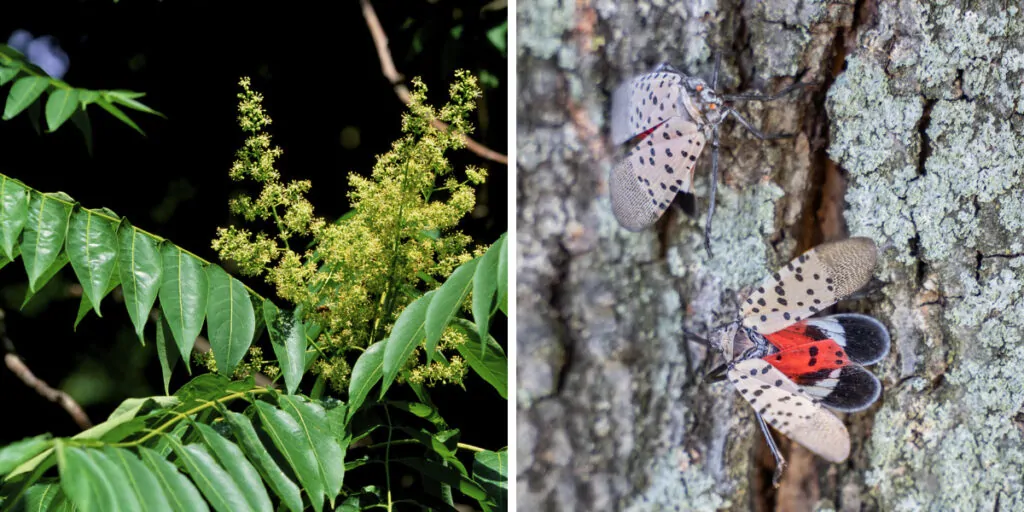
Invasive species are more prevalent than you may think. Tree of Heaven, for example, was introduced to the United States as a landscape specimen. Now it is established throughout the US and outcompetes native species for resources and disrupts balanced ecosystems. Furthermore, Tree of Heaven is the host tree for the spotted lanternfly, an invasive insect that is threatening our agricultural industry.
Fighting invasive plants and animals may seem like a big challenge, but even the home gardener can do their part to help. The Alliance for the Chesapeake Bay has published some helpful tips to follow when hiking, boating, and gardening to help prevent the spread of invasive species. Want to know what to look out for? The US Department of Agriculture has curated comprehensive lists of invasive species by region or state. You can help battle invasive species in your own backyard by safely removing and reporting invasive plants you find. And remember, the best defense is a good offense. A well-established native garden that utilizes living mulch (groundcovers that fill the space between larger plants) instead of traditional sterile mulch can help keep invasive plants from establishing a foothold. Shop our native plants to fill your garden with natives and help fight off invasive species! Want to stay up-to-date with all of our Native News? Sign up for our email newsletter!
This article was originally published on February 27th, 2019 by American Native Plants.